
Civic Dialogue Friendlies
Civic Conversation & Positive Action to Build a Free & Fair Democracy and Lower the Political Temperature
Imagine…
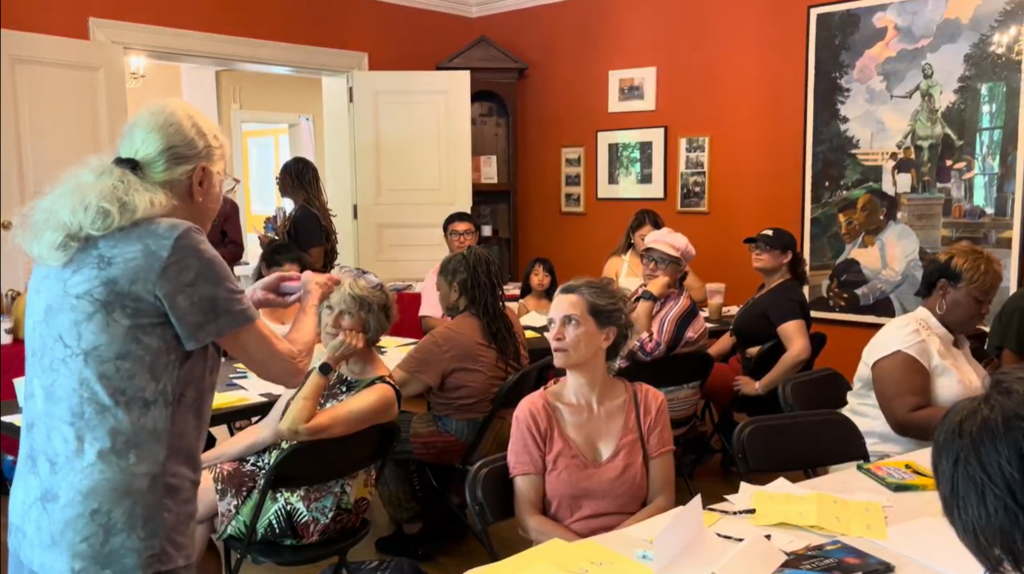
people from DC, Pennsylvania and Virginia–and eventually from all over the country–getting paired up with people from different backgrounds and with different political beliefs to talk an hour a week over 6 weeks via Zoom — and maybe in person for the first and last sessions.
They get to know and respect one another as human beings first.
Then they tackle potentially difficult but important conversations about policy issues.
The goal? Work together to make sense of where we are as a country and how we can move forward together–taking care of ourselves, our families, and our communities. We support them with videos and resources to help them listen and communicate well, think systematically, understand the issues, and manage any strong emotions that arise.
Our country faces lots of challenges. How do we get through them?
Get off the sidelines, turn off our screens, and start helping one another and talking with each other as “civic friends”
Let’s build communities and a nation where we work together across political differences. In World War II and the Great Depression, we did it. We can do it again now. Build mutual respect and understanding. Find common ground and make progress.
How it works:
• Meet as a small group first; then four 1-hour, 1-on-1 conversations over 4 weeks over Zoom breakout rooms with someone with different political views or experiences.
• Get to know one another as people—our experiences & values.
• Talk about political issues that concern you and the sources of information that you each rely on.
• We’ll help you with whatever resources you need to understand the issues and have safe & rewarding conversations, whether you find common ground or “agree to disagree.
The Sessions:
The groups would be limited to 6-10 people and would be supported throughout by a skilled facilitator. We envision a couple of approaches, one that begins and ends with in-person sessions, and another that would be purely virtual and bring together people in urban and rural communities who live too far apart to make in-person meetings feasible. Both the virtual and hybrid approach would begin with a group meeting of 60-90 minutes where people get to know one another and agree on goals and principles for the conversations.
We shy away from the one-size-fits-all approach. Some people are very comfortable with abstract moral reasoning and putting themselves in other people’s shoes. Others may not be. Some are comfortable with long and intense conversations, while others may need frequent breaks. Some may want to dig deep over several sessions into one issue while others may be content to zoom through topics. The bottom line is that we are providing a framework for the sessions and different pairs may tackle them differently
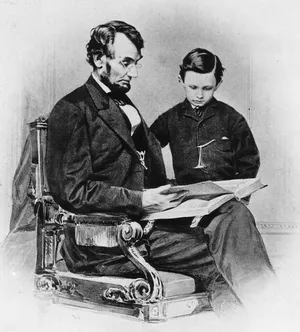
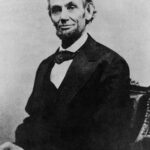
“We are not enemies, but friends.”
I am loath to close. We are not enemies, but friends. We must not be enemies. Though passion may have strained, it must not break our bonds of affection. The mystic chords of memory, stretching from every battle-field, and patriot grave, to every living heart and hearth-stone, all over this broad land, will yet swell the chorus of the Union, when again touched, as surely they will be, by the better angels of our nature.
–Pres. Lincoln, 1st Inaugural, 1861
Why Civic Dialogue Friendlies?
Civic =
It’s about us, not just about me as an individual. How can we work together as a neighborhood, city, community, state or nation to make a better life for everybody?
Dialogue =
It’s about conversation, not argument – a shared effort to understand our world and ourselves, and what we can do to make things better.
Friendlies =
In soccer and other sports, teams compete in preseason games. They compete hard, but the real goal is to help one another improve. And nobody gets hurt in a friendly match. That’s the spirit of these dialogues, too.
Our Inspiration
With malice toward none, with charity for all, with firmness in the right as God gives us to see the right...let us strive on to finish the work we are in... to cherish a just and a lasting peace among ourselves and with all nations. – Pres. A. Lincoln, 2nd Inaugural Address, 1865
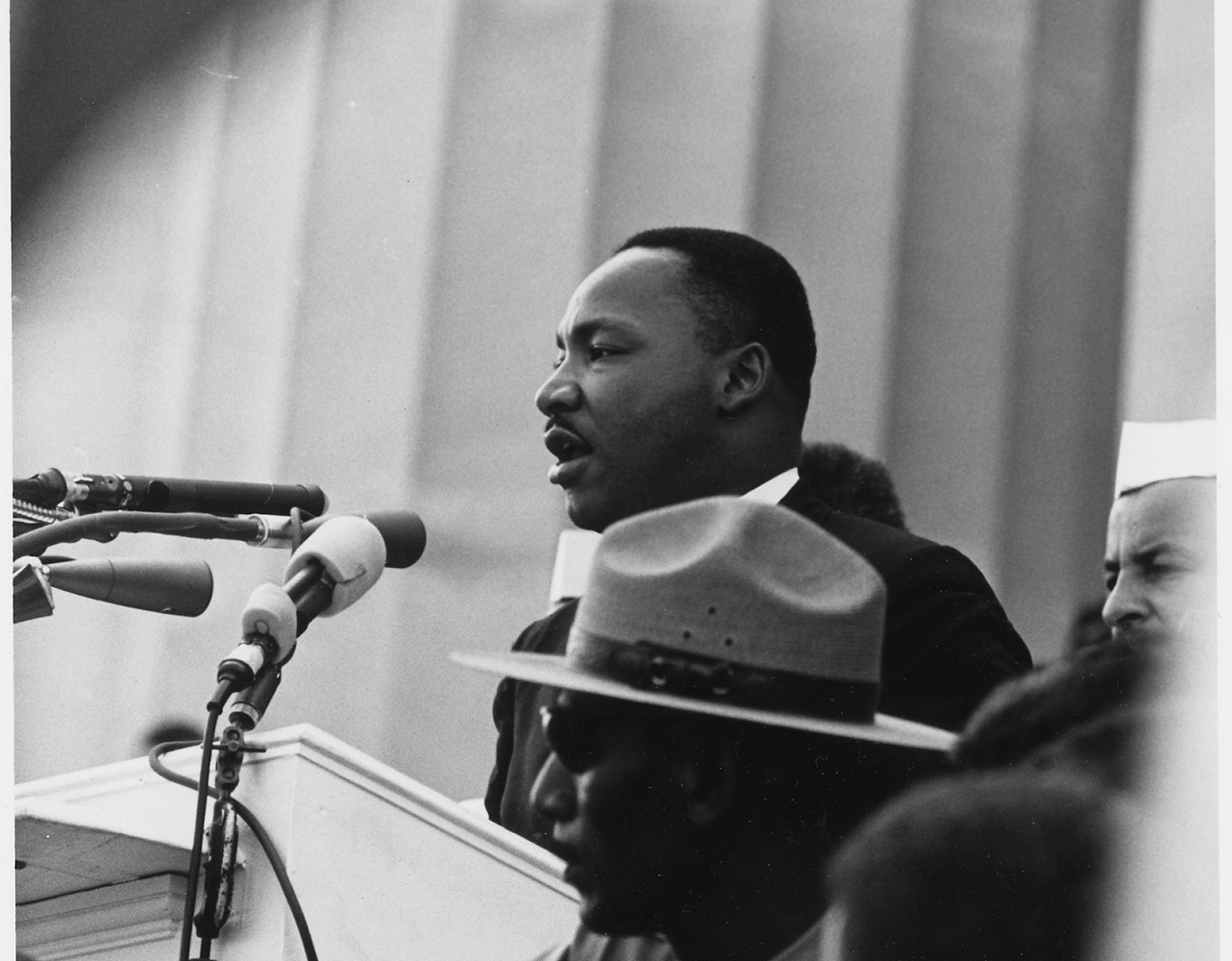
We must work with passion and determination to bridge the gulf between our scientific and technological progress, on the one hand, and our moral and spiritual progress on the other. If we do not learn to live and work together as brothers and sisters, we will perish together as fools. - Martin Luther King (1967, edited)
What we need in the United States is not division; what we need in the United States is not hatred; what we need in the United States is not violence or lawlessness; but love and wisdom, and compassion toward one another, and a feeling of justice toward those who still suffer within our country ...Let us dedicate ourselves to what the Greeks wrote so many years ago: to tame the savageness of man and make gentle the life of the world. Let us dedicate ourselves to that. And let us say a prayer for our country and our people." - Sen. Robert F. Kennedy, April 4, 1968
Other Project Elements
On-the-Ground Outreach to Recruit Participants:
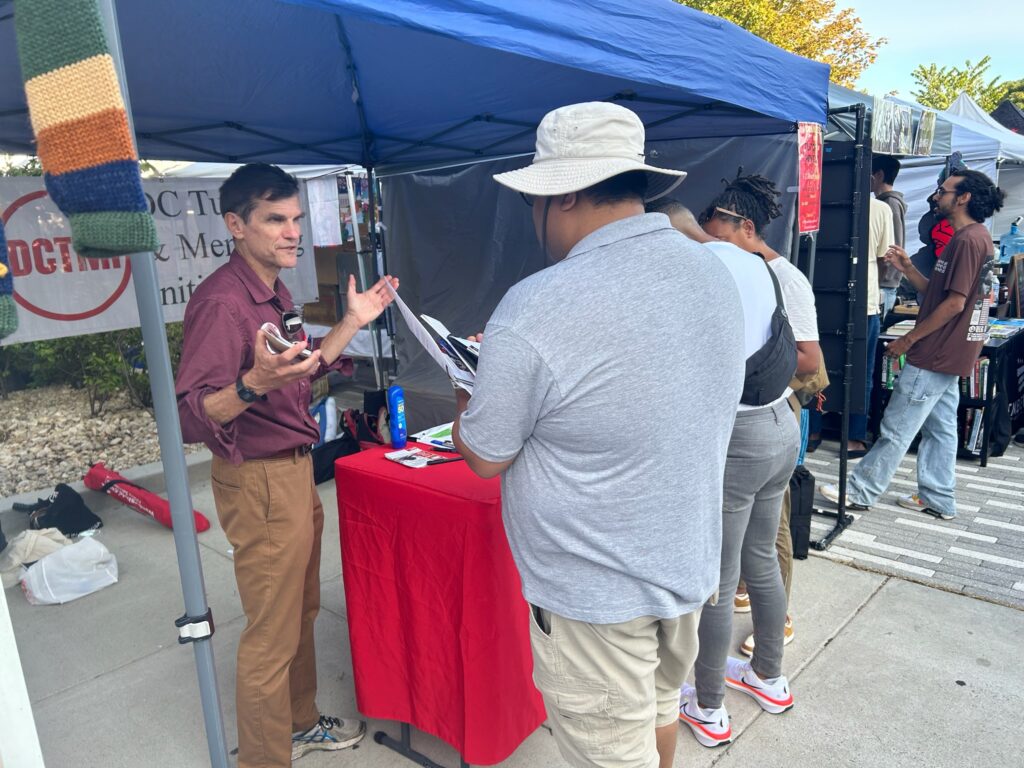
A disproportionate percentage of people involved in dialogue and deliberation efforts–85% according to one estimate–lean toward the middle or left politically. I believe we can fix this imbalance by taking a more active approach. Our outreach would combine tabling at events and public spaces, working with local nonprofits and community leaders, social media advertising, and possibly door-to-door canvassing or flyer distribution.
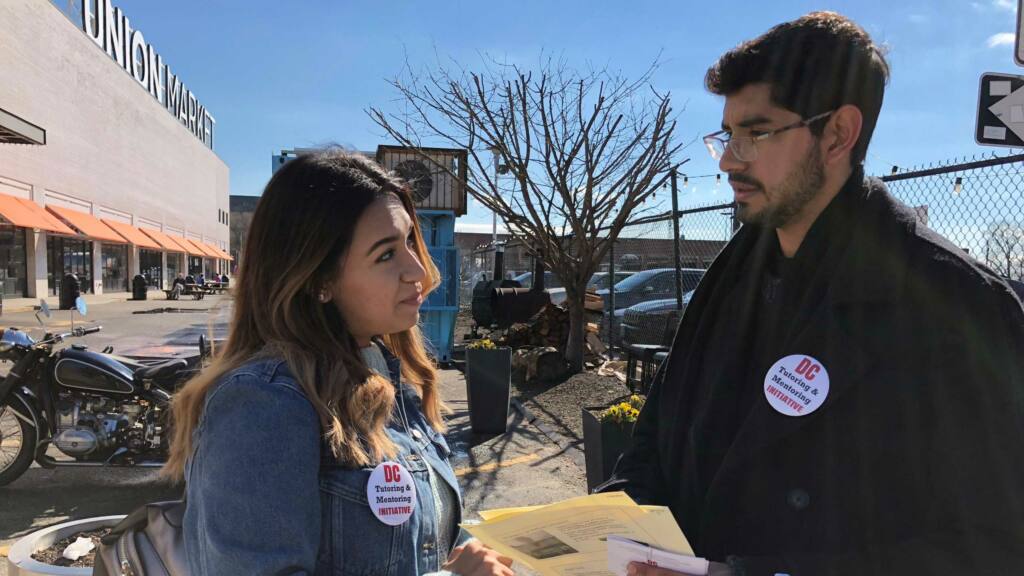
Our work at the DC Tutoring & Mentoring Initiative has helped us hone our skills approaching strangers and gently but firmly asking them to consider getting involved as tutors and mentors to make a better community. (We signed up more than 7,000 people last year.) I expect a similar approach will prove effective in rural communities, even if the specific request and the values tapped may differ.
Options for Community Service During or After the Sessions:
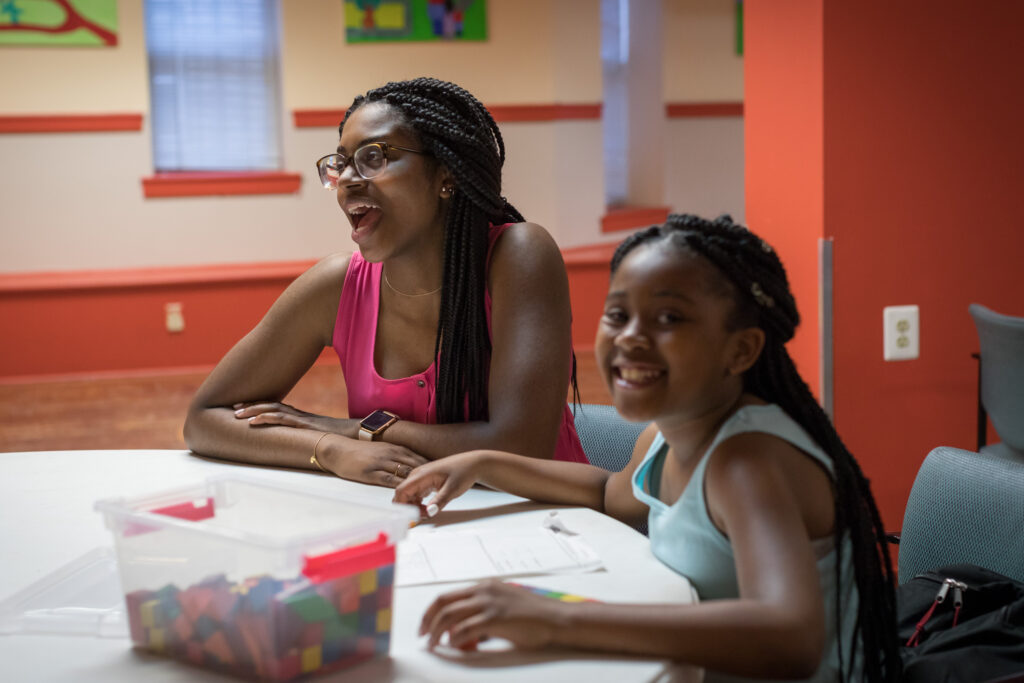
As mentioned above, we signed up more than 7,000 people in the DC area last year to get involved as tutors and mentors for 1-2 hours per week. This sort of concrete volunteer action appeals to many people and, we hope, has ripple effects that complement the less action-oriented goals of the dialogues. Both approaches are needed. (The 2025 More in Common report found that 64-69% of people were interested in “working to achieve a mutual goal that improves [their] community” or “working in the same workgroup” to bridge political differences.)
Continuation of the Dialogues:
We recognize that six sessions may not be enough for many participants and we hope that many will want to continue to meet on an ongoing basis or periodically. Depending on the level of interest and desired support, we hope to be able to continue to help.