Whether we think most of our problems have systemic or structural, are caused by the “one percent” or corrupt politicians, or have other sources in human nature, we can agree that the solution still involves millions of personal choices we make (or fail to make) each day. The choices could be acting as if we don’t have time to exercise or purchasing big homes and fancy cars, which require them, that leave us no time to take care of ourselves or our families. Or the choices make be taking time each morning to “sharpen the saw,” as Steven Covey (“Seven Habits of Effective People” put it), by exercising, meditating or praying, working systematically to develop the wisdom and empathy to make wiser decisions as a business person, taxpayer, manager, teacher, or parent — or in many other roles that we play at work or in our families and communities.
Other Perspectives
Mahatma Gandhi
“The difference between what we do and what we are capable of doing would suffice to solve most of the world’s problems.” – Mahatma Gandhi
John Lewis
“The most important lesson I have learned in the fifty years I have spent working toward the building of a better world is that the true work of social transformation starts within. It begins inside your own heart and mind, because the battleground of human transformation is really, more than any other thing, the struggle within the human consciousness to believe and accept what is true. Thus to truly revolutionize our society, we must first revolutionize ourselves. We must be the change we seek if we are to effectively demand transformation from others.” – Congressman and Civil Rights Movement leader John Lewis, Across that Bridge.
John Lewis, leader of SNCC, rises to speak at the March on Washington, Aug. 28, 1963. Photo by Bob Adelman
Anne Morrow Lindbergh
When one is a stranger to oneself then one is estranged from others too. If one is out of touch with oneself, then one cannot touch others. How often, in a large city, shaking hands with my friends, I have felt the wilderness stretching between us. Both of us were wandering in arid wastes, having lost the springs that nourished us — or having found them dry. Only when one is connected to one’s own core is one connected to others, I am beginning to discover. — Anne Morrow Lindbergh
General Joshua Lawrence Chamberlain
The inspiration of a noble cause involving human interests wide and far, enables men to do things they did not dream themselves capable of before, and which they were not capable of alone. The consciousness of belonging, vitally, to something beyond individuality; of being part of a personality that reaches we know not where, in space and time, greatens the heart to the limit of the souls ideal, and builds out the supreme of character. – General Joshua Lawrence Chamberlain (Battle of Gettysburg hero)
More Reading
Listed here are some websites that will help you think about the choices you can make by looking at the choices made by others:
- Jim Collins, What to Make of a Life: Cliffs, Fog, Fire and the Self-Knowledge Imperative (2026) or video with Oprah
- This I Believe (NPR). The radio show captures the core values as ordinary individuals and well-known guests talk about their lives.
- The Legacy Project: Lessons from the Wisest Americans
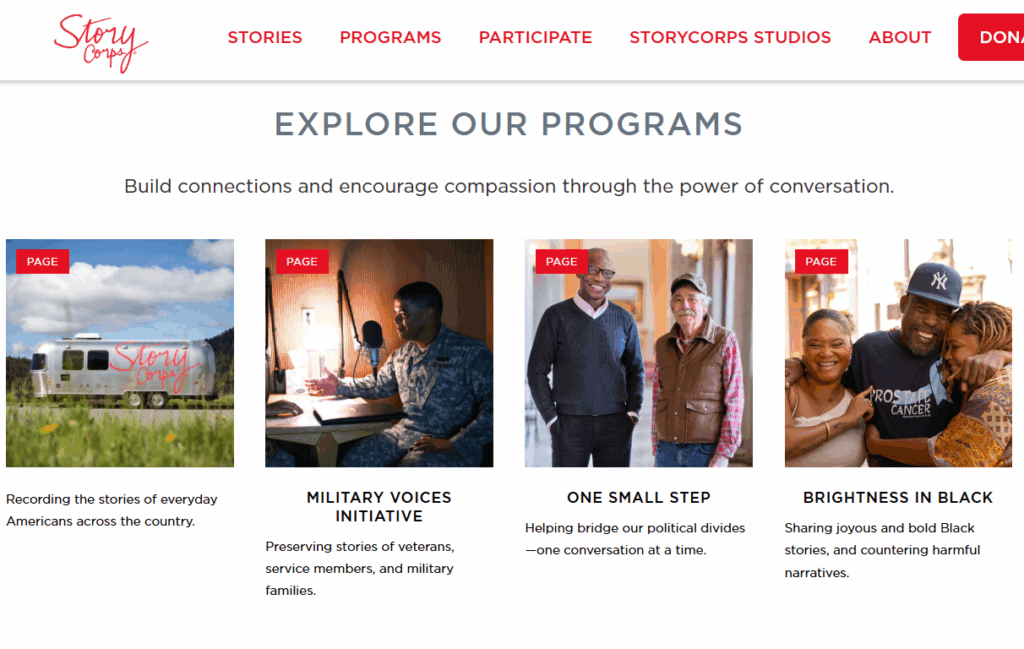
- StoryCorps – “Our mission is to provide Americans of all backgrounds and beliefs with the opportunity to record, share, and preserve the stories of our lives. Since 2003, StoryCorps has collected and archived more than 40,000 interviews from nearly 80,000 participants.” (You can also find many StoryCorps stories on PBX at http://www.pbx.org/storycorps.
To Consider...
Why aren’t we all Good Samaritans?
We don’t take every opportunity to help because our brain is focused in wrong direction… A famous study found that seminary students didn’t help person in obvious distress if they feel they are under time pressure, despite having just watched videos on Biblical verses. “We’ve become victims of a world that points us elsewhere [away from not purchasing things from polluters and labor law violators, etc.]” “I was in an urban trance when I saw man obviously distressed.” Lots of people walked past. All it took was simple act of noticing and stopping to help him. Once Goleman stopped, others immediately did too. Watch his TED talk below:
Leadership requires moving forward and making decisions in the face of substantial uncertainty and risk. It requires judgment and intuition and the ability to work with others. There are no “great men” out there to save us. Harvard Professor Ronald Heifetz touches on this in a video about adaptive vs. technical leadership challenges: